
Shaping the Future with Sustainable Power
On-grid Rooftop Solar Solution
Overview
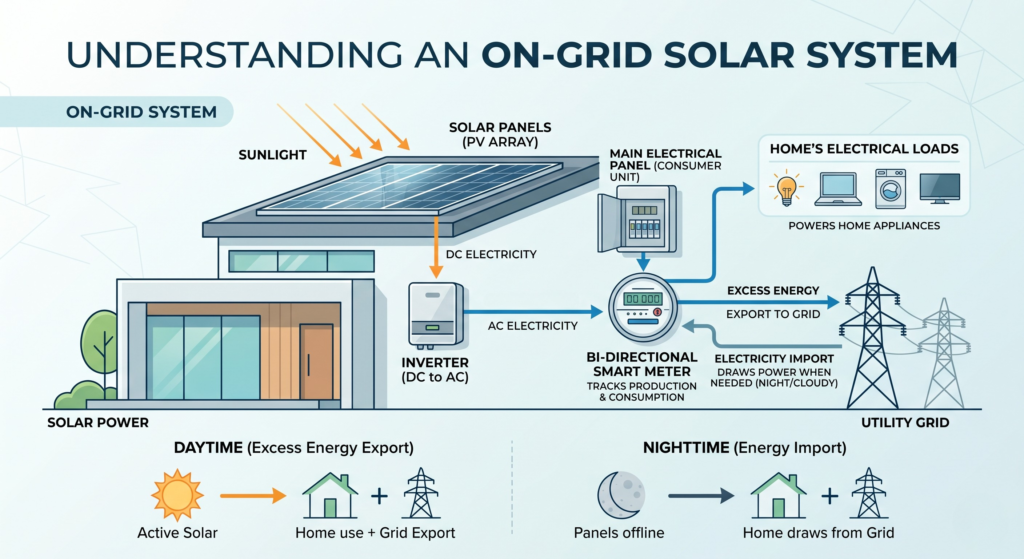
- An on-grid rooftop solar system generates electricity using sunlight and connects directly to the existing electricity grid such as the KEB supply.
- Solar panels produce direct current (DC) electricity when exposed to sunlight.
- A solar inverter converts DC power into alternating current (AC) so it can be used for running appliances in homes, offices, and commercial buildings.
- During the daytime, electricity generated by the solar panels is first used within the building.
- If the system generates more electricity than required, the excess power is exported to the electricity grid.
- When solar generation is lower than the building’s demand, the required power is automatically drawn from the grid.
Net Metering
- A bidirectional meter is installed to track electricity flow.
- The meter records:
- Electricity exported to the grid
- Electricity imported from the grid
- At the end of every billing cycle, the exported and imported units are adjusted against each other.
- The remaining difference is called net consumption.
- Consumers pay the electricity bill only for the net units consumed from the grid.
Surplus Power
- If the solar system exports more electricity than it consumes, the additional units are considered surplus power.
- According to the Power Purchase Agreement with CESCOM, this surplus energy may be purchased by the utility at the approved buyback tariff.
- The agreement period is usually valid for up to 25 years.
Advantages of On-Grid Solar Systems
- Helps reduce electricity expenses over the long term.
- Maximum savings occur when solar power is used directly during daytime.
- Excess electricity exported to the grid earns credit through net metering.
- These credits can offset electricity charges and significantly reduce monthly bills.
- Installation cost is lower compared to off-grid or hybrid systems because batteries are not required.
- Well suited for cities and towns where grid supply is reliable.
- Residential rooftop solar installations are eligible for government subsidies, which reduces the overall installation cost.
Limitations of On-Grid Solar Systems
- The system does not provide power backup during grid outages.
- When the grid supply fails, the solar system automatically shuts down for safety reasons.
- This safety feature prevents electricity from being sent into the grid during maintenance work on power lines.
- Since batteries are not used, the system cannot store electricity for later use.
- Solar panels produce less electricity during cloudy or rainy weather.
- Solar systems do not generate electricity at night.
Components Used in On-Grid Solar Systems
On-grid systems require fewer components, making them cost-effective and easy to maintain.
Main components include:
- Solar panels
- Mounting structures
- DC and AC cables
- Connectors and junction boxes
- Grid-tie solar inverter
Types of inverters used:
- String inverter – connected to multiple solar panels.
- Micro inverter – installed individually for each panel.
Other essential equipment
- Bidirectional net meter
- AC and DC isolators
- Safety switches and disconnect devices
- Protection equipment such as MCBs.
Choose a Right Installer/EPC Vendor
Grid-tie RTS solutions not only requires good photovoltaic design understanding but also good knowledge of grid LT/HT electrical fundamentals. Knowledge on KEB/KREDL/Govt agencies’ procedural formalities for sanctions/approvals/policies is essential to guide customers w.r.t taking up right decision. Go with an EPC vendor who is knowledgeable, provides the un-biased value-for-money solution to meet your exact requirements and NOT force-fit any standard solution to you. Look for value-added services vendor offers, like liaison support with CESCOM /OEMs/Banks and NBFCs etc. so that going solar is made easy for you.
Get Ready to Save the Environment and your Energy Bills !!
Get in touch with us and we will be very happy to study your requirement and come up with cost effective Energy saving solutions, that are both environment friendly and budget conscious.