
Shaping the Future with Sustainable Power
Hybrid Solar System
Overview of Hybrid Solar System
- A hybrid solar system combines the features of a grid-connected solar system with battery storage.
- It uses solar panels, batteries, and the electricity grid together to provide reliable power and improve energy savings.
- In this system, solar panels remain connected to the electricity grid while also charging batteries for backup power.
- The electricity generated from sunlight passes through a solar inverter, which converts it into usable power.
- The generated electricity can be:
- Used directly in the home or building
- Stored in batteries for later use
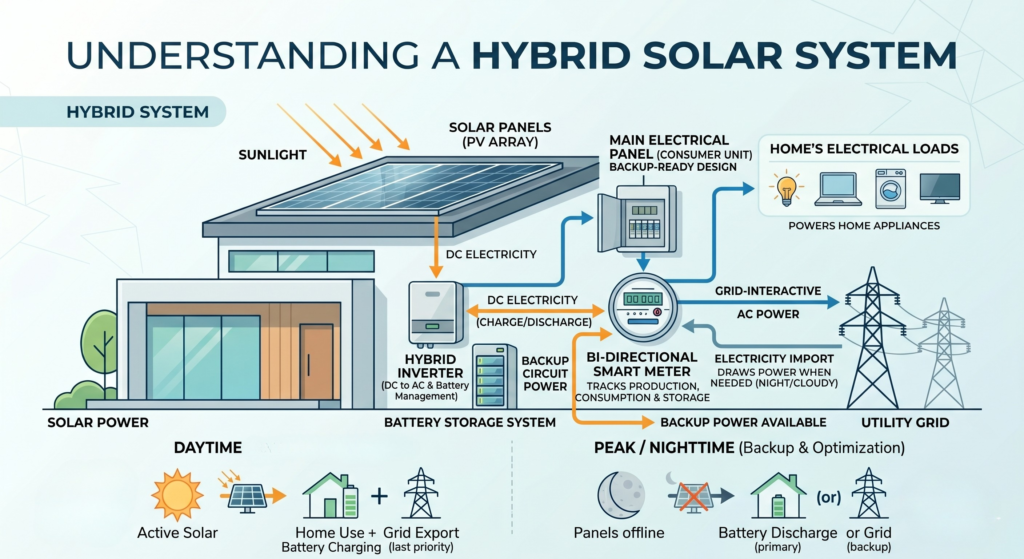
How a Hybrid System Works
- When solar panels produce more electricity than required, the excess energy is stored in batteries instead of being wasted.
- During night time, cloudy weather, or power outages, the stored battery power supplies electricity to the building.
- If the battery power is fully used, the system automatically draws electricity from the grid to meet the demand.
- After meeting the building’s energy needs and charging the batteries, any additional solar energy can be exported to the grid.
- The system automatically selects the most suitable energy source depending on availability:
- Solar power
- Battery storage
- Electricity grid
Advantages of Hybrid Solar Systems
- Provides continuous and reliable power supply, even during electricity outages.
- Allows efficient management of electrical loads by prioritizing energy sources based on availability
- Offers greater energy independence by storing solar energy for later use.
- Helps reduce electricity bills while still providing backup power.
- The overall cost is lower than a fully off-grid system because the grid can still be used when required.
Key Components of a Hybrid Solar System
Hybrid systems use many of the same components as on-grid systems, along with additional equipment for energy storage.
Main components include:
Battery Storage
- Solar batteries are used to store excess electricity generated by the panels.
- Common battery types include:
- Deep cycle lead-acid batteries designed for solar use
- Lithium-ion batteries such as LFP batteries, which offer higher efficiency and longer life.
Hybrid Solar Inverter
- A hybrid inverter manages the power flow between:
- Solar panels
- Battery storage
- Electricity grid
- It is more advanced than a standard grid-tie inverter because it controls multiple power sources simultaneously.
Additional Components
- Charge controller – regulates battery charging and prevents overcharging.
- DC disconnect switches – used to safely stop current flow during maintenance or servicing.
- Bidirectional electricity meter – measures:
- Solar energy generated
- Electricity consumed by the building
- Power exported to the grid.
When to Choose a Hybrid Solar System
- Hybrid systems are generally more expensive than standard on-grid systems, but they can be the best option in certain situations.
- There are frequent electricity outages and reliable backup power is required.
- The user wants greater energy independence from the grid.
- There is a need to maximize the use of solar energy while still having the option to use grid power when necessary.
Get Ready to Save the Environment and your Energy Bills !!
Get in touch with us and we will be very happy to study your requirement and come up with cost effective Energy saving solutions, that are both environment friendly and budget conscious.